
In this insight, Mark Girvan reflects Streamliners' ICIC26 session with partners from England, Canada and Wales, exploring how locally trusted care pathways can make integrated care real in daily practice by connecting guidance, services, clinicians and communities around people’s needs.
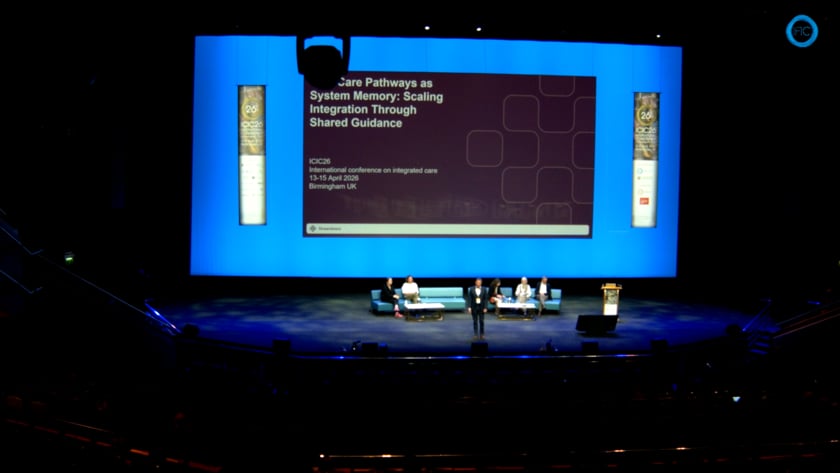
At ICIC26, Streamliners brought together partners from England, Canada and Wales to explore a simple question: if integrated care has been a policy ambition for decades, what does it take to make it happen in daily clinical practice?
The session was chaired by Dr David Hambleton, Global Ambassador for Streamliners and former Chief Executive of the organisation. A consultant geriatrician by background, David opened with a challenge. Policymakers may use the language of integrated care, but they do not deliver it. Real integration happens when people across systems build the practical mechanisms that help clinicians, services and communities work together around people’s needs.
For us, that is why care pathways matter. They are not just documents. At their best, they are a shared agreement about what good care should look like locally, how people should be assessed and supported, when specialist input is needed, and how different parts of the system connect. They turn policy intent into something usable in the consultation room, in referral decisions, in community services and across organisational boundaries.
South Tyneside: culture comes first
Dr Jon Tose, general practitioner (GP) and former clinical leader in South Tyneside, reflected on one of the earliest English journeys with HealthPathways. South Tyneside’s integration story began through the national Integration Pioneers programme and its relationship with Canterbury District Health Board in New Zealand. The learning was profound: focus on people staying well in their own homes and communities, build trust between organisations, and assume that what is best for the person will be best for the whole health and care system.
Jon emphasised the importance of the process HealthPathways uses to facilitate collaborative agreement. The locally agreed pathway is important, but the act of mutual collaboration to reach that agreement is just as valuable. It brings primary care, secondary care, community services, social care and the voluntary sector into the same conversation about how care should work.
For clinicians, the impact was practical. Instead of searching through drawers, emails, posters and disconnected websites, local guidance, referral criteria, service information and patient resources were brought together in one place. GPs reported that their work became easier. Hospital clinicians saw better quality referrals. Most importantly, clinicians discovered services and community assets they had not previously known existed.
The South Tyneside experience showed that pathways can help hold an integrated culture together, even as structures change around it.
Canada: building the first North American HealthPathways implementation
Dr Sarah Jarmain, psychiatrist and Executive Sponsor for the Canadian implementation, and Mariam Al-Azem, Integrated Care Pathway Manager at Middlesex London Ontario Health Team, shared the experience of introducing HealthPathways across three Ontario Health Teams.
Their story began with common system pain points: fragmented navigation, pressure on primary care, inconsistent pathways, and difficulty sustaining improvement work. HealthPathways offered a structured but adaptable approach. Within the first year, the teams launched 46 localised care pathways, with a further 54 in development.
Sarah and Mariam were clear that implementation was not linear. Because Ontario lacked a cross-jurisdictional clinical governance structure, they had to build one. That meant establishing shared workflows, agreeing how pathways would be adapted across regions, and creating space for subject matter experts and primary care clinicians to work through differences.
Equity was also central. The Canadian teams are developing ways to ensure that pathways reflect the needs of equity-deserving communities and support clinicians to consider those needs consistently.
Early outcomes are promising: more than 680 registered users, growing primary care engagement, rapid incorporation of updated guidance, and stronger collaboration between primary care and specialists. The key lesson was that scale requires structure, but sustainability depends on relationships, trust and continuous learning.

Wales: from national consistency to local relevance
Dr Dyfrig Ap Dafydd, GP in Anglesey and Primary Care Lead for the Planned Care Team in Wales, explained why Wales adopted Community HealthPathways as part of its national focus on quality, equity and referral improvement.
For Welsh general practice, the central test was whether pathways made work easier and care safer. GPs want to follow guidance, but guidance often sits passively in multiple places. HealthPathways gives clinicians one accessible, standardised and locally relevant source of truth.
Dyfrig emphasised the importance of GP involvement. Guidance written without primary care risks being unrealistic, or worse, perceived as shifting work into general practice. In Wales, engagement with GP leadership and in particular General Practitioners Committee (GPC) Wales was fundamental.
The Welsh model balances national pathway sharing with local adaptation. One pathway can be developed once and then localised, reducing duplication while preserving relevance. With more than 1.5 million page views, Wales has shown that clinicians will use pathways when they are practical. Early evaluation in Cardiff also suggests a plausible impact on referral rates.
Integrated community care: pathways need system governance
Cath Doman, from Cardiff and Vale Regional Partnership Board, widened the lens. She described Wales’ work to develop an integrated community care system spanning prevention, coordinated care, crisis response and hospital avoidance.
Her contribution underlined that pathways sit within wider system governance. The Welsh 50-day winter challenge showed that when national clarity, regional partnership and operational focus come together, systems can improve flow, reduce delays and strengthen community-based care. The work is difficult, but shared purpose matters.
Conclusion: pathways are infrastructure for integration
This session reinforced what HealthPathways and Streamliners see across multiple countries: integrated care does not happen because it is written into policy. It happens when systems create the practical infrastructure for people to work differently.
Care pathways matter because they make expectations visible. They connect clinical guidance with local services. They support better referrals, more consistent care, shared learning and more confident conversations with patients. Above all, they give systems something concrete to organise around.
The message from ICIC26 was clear. If we want integrated care to move from aspiration to reality, we need locally owned, clinically trusted, continuously updated pathways that help people do the right thing, in the right place, every day.
Watch the full session recording here


Mark Girvan
Streamliners